
The signs of hail damage on a roof almost never look like what homeowners expect. There’s no hole. Likewise, there’s no leak. The ceiling is dry, and the shingles look fine from the driveway. So the answer feels obvious: “we got lucky.”
But here’s the hard truth. Hail can badly damage your roof without leaving a single drop of water in your house. And by the time water shows up, your window to claim it may have already closed. Meanwhile, Kansas City logged 210 hail reports in the past twelve months. In this metro, “we got lucky” is the most expensive sentence in owning a home.
What Hail Actually Does to a Roof
Hail rarely punches holes. Instead, it bruises.
When a hailstone hits a shingle, it crushes the protective granules into the layer underneath. Think of pressing your thumb into the skin of an apple. The apple doesn’t split open. Still, the thumb bruises the flesh under the skin, and the rot starts there. Specifically, hail hits cause three things:
- Granule loss. The granules are your shingle’s sunscreen. Once hail knocks them loose, the sun cooks the bare spot. As a result, the shingle ages years in months.
- Cracked cores. The fiberglass core of the shingle cracks under the surface. You can’t see it from the ground. Yet it’s the spine of the shingle.
- Broken seals. Hail and wind together unseal shingles from each other. So the next normal windstorm can lift them like pages of a book.
None of that leaks on day one. However, each one is a countdown. It counts down to leaks, to blown-off shingles, and to a worn-down roof. Later, your insurer will call that “wear and tear” — and they won’t cover it.
Cosmetic vs. Functional: The Word That Decides Your Claim
When an adjuster looks at hail damage, one question decides everything. Is it cosmetic or functional?
Cosmetic means the roof looks worse but still works. Functional, on the other hand, means it can no longer keep out water or stand up to wind. Insurance generally must cover functional damage. But here’s the catch: adjusters often call fresh hail damage cosmetic exactly because it hasn’t started leaking yet. In other words, the bruise hasn’t rotted, so everyone calls the apple healthy.
That’s why proof standards matter so much. In fact, cracked cores, crushed ridge caps, and heavy granule loss count as functional damage under industry rules. That’s true even when the ceiling is bone dry. The Massachusetts Division of Insurance makes the same point from the government side: roof condition is a technical call, not an eyeball test. So if your adjuster already used the word “cosmetic,” don’t assume that’s final. Here’s exactly what to do next.
The Signs of Hail Damage on a Roof — What We Actually Look For
Clues You Can Spot From the Ground
You can spot some clues safely, without a ladder. For example: dented gutters and downspouts, dinged AC fins, and pockmarked window screens. Also, look for piles of granules where your downspouts drain. Those are witnesses. Because if hail hit your gutters hard enough to dent metal, it hit your shingles too.
What the Pros Check Up Top
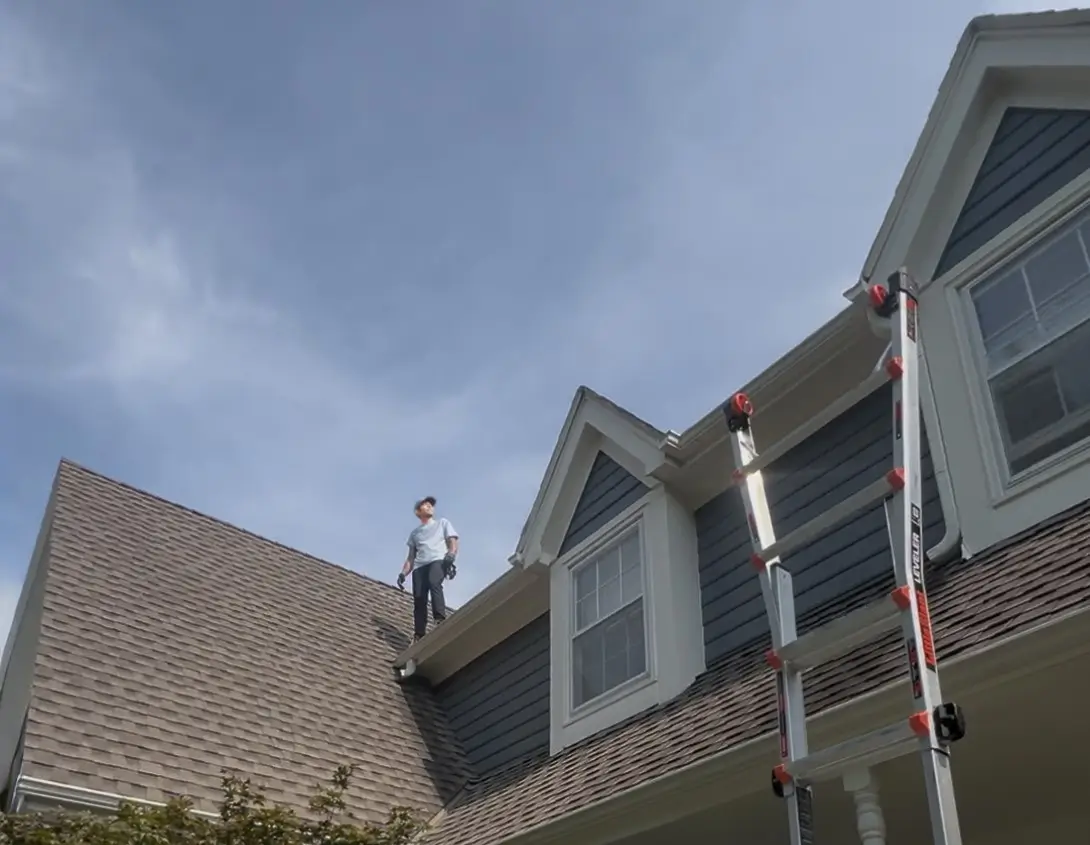
Still, the signs of hail damage on a roof that decide claims live up top. And they take trained eyes. First, test squares — a 10’×10′ section where we count hits to meet insurer rules. Next, checks on soft metal and seal strength. Finally, cracks you find by feel, not sight. That’s exactly what a No Obligation Storm Property Check records — in the format the law requires insurance companies to accept.
And about the honest-answer part. Sometimes we get on a roof and find nothing that clears your deductible. When that happens, we tell you. After all, a claim you don’t need to file is money and claim history you keep. (Filing order matters as much as damage — see How to File a Roof Insurance Claim in the Right Order.)
Why “Wait and See if It Leaks” Is a Bet You Can’t Win
We get the instinct. No leak, no problem, no awkward insurance call. But waiting fails on three separate clocks.
First, policy deadlines. Some policies give you only 60–90 days to file after the storm. Second, growing damage. Bruised shingles break down, and next spring’s storm finishes what this one started. At that point, the insurer blames the damage on “age.” Third, your insurer’s own cameras. Companies now review roofs by satellite and drone. So a worn roof they spot before you record it becomes their story, not yours.
Meanwhile, every hail storm brings door-knockers promising free roofs to anyone who’ll sign. If someone says your roof is a total loss without ever seeing it, read this first.
The Bottom Line
“No leak” tells you about today. However, it tells you nothing about what the last hailstorm did to your roof’s next ten years. The signs of hail damage on a roof are small, technical, and tied to deadlines. That’s exactly why smart homeowners get eyes on their biggest asset after every major hail storm. Not after the first water stain.
So treat “did we get lucky?” as a question to check, not to guess.
Had hail this season? Schedule your No Obligation Storm Property Check → No damage = no cost, no obligation. Either way, you’ll know.
Want more homeowner guides like this? Browse the NSG blog →