Most owners treat rental property roof maintenance as a binary. The roof is fine, or it’s an emergency.
That framing makes roofs the most expensive line item in a small portfolio. Not because roofs cost much. Because reactive replacement costs far more than the same work scheduled.
Here’s the arithmetic.
What reactive actually costs
When a roof fails on an occupied rental, you’re not buying a roof. You’re buying a roof plus everything the failure touched.
Interior damage comes first. Drywall, paint, flooring, and sometimes tenant belongings. Whether those fall to you depends on cause and lease terms.
Emergency pricing follows. A leak in February gets whatever crew is available, at whatever they charge. Those are also the worst installation conditions of the year.
Habitability comes next. Depending on severity and jurisdiction, you may owe rent abatement or relocation. That’s revenue you don’t collect on a unit you still carry.
Finally there’s the relationship. A tenant who lived through a ceiling leak doesn’t renew. Turnover carries its own cost.
In fact, the roof itself may be the smallest number on that list.
What scheduled costs
A planned replacement uses the same materials and the same labor. It just drops everything above. It also gives you three advantages reactive work can’t.
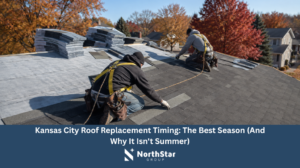
You choose the season. That means better installation conditions and better pricing. Timing a replacement into the right window affects crew availability too.
Second, you choose the vacancy. Schedule into a natural turnover gap and nobody gets displaced.
Third, you choose the contractor. Compare bids on your timeline instead of taking whoever answers during a storm.
The rental property roof maintenance cadence
Twice a year is the standard. It doesn’t require a roofer both times.
Spring, after storm season. Check for storm damage while any insurance filing window is still open.
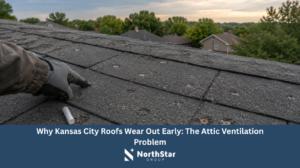
Fall, before winter. Clear gutters, verify flashing and boots, and confirm attic ventilation before the freeze-thaw cycle starts. Most owners skip ventilation. It’s the item that quietly decides whether a roof reaches its rated life.
Each visit should document five things: photographs, decking and flashing condition, gutter and drainage function, attic moisture, and estimated remaining service life.
That last item changes how you operate. A roof with five years left is a budget line. A roof with unknown remaining life is a risk with no number attached. You can’t plan around it.
Portfolio-level planning
Hold more than a few doors and you need a schedule. List every property with roof age, material, last inspection date, and estimated remaining life.
Look at it once and you’ll usually find the same thing. Several roofs cluster in the same replacement window. Either you bought the properties around the same time, or builders raised them in the same era.
Knowing that two years early lets you stagger them. Finding out during the same winter does not.
What to ask a contractor for
For portfolios, ask two questions. Do they offer documented annual inspections with written condition reports and photo records? Will they price a multi-property replacement as a scheduled program rather than one-off jobs?
The documentation matters beyond planning. Rental property roof maintenance records build a history. That history helps with insurance and with disputes over habitability. It